
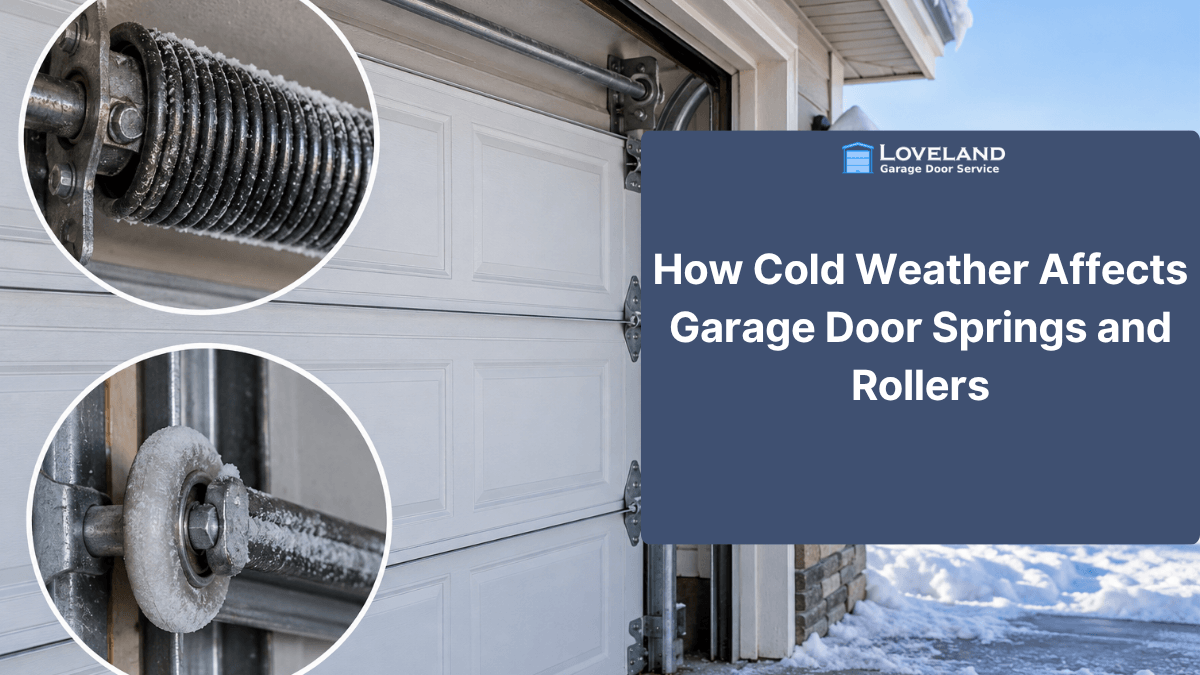

When temperatures drop, your garage door may not behave quite the same way it does during warmer months. The door can become noisier, feel heavier, move more slowly, or have trouble opening and closing smoothly. In many cases, cold weather can expose problems that were already developing in the garage door’s springs, rollers, tracks, or other hardware.
For homeowners in Loveland, understanding how winter conditions affect these components can make it easier to recognize problems early. A little attention before or during the colder months can also help prevent an unexpected garage door failure when you need to leave home.
Why Cold Weather Can Affect a Garage Door
A residential garage door is made up of many moving parts that have to work together. Springs counterbalance the weight of the door, while rollers travel along the tracks as the door moves.
Cold temperatures can affect these components in several ways. Metal parts can contract slightly, lubricants can become thicker, and moisture can contribute to rust or freezing. None of these factors necessarily means a garage door will fail, but an older or poorly maintained system may be more likely to show problems when temperatures fall.
How Cold Weather Affects Garage Door Springs
Garage door springs do a significant amount of work. They help counterbalance the weight of the door so that the opener does not have to lift the entire load by itself.
During cold weather, several issues can become more noticeable.
Increased Spring Stiffness
Lower temperatures can make metal components less flexible. A spring that is already worn may seem stiffer during cold weather, which can affect the way the garage door moves.
This doesn’t mean cold temperatures automatically damage a healthy spring. More often, winter conditions reveal an existing weakness in a spring that is already nearing the end of its service life.
Existing Spring Damage May Become More Noticeable
Garage door springs go through repeated cycles of tension and release. Over time, this can lead to fatigue.
A spring that has been working for years may continue operating normally until colder conditions put additional stress on the system. Homeowners may then notice that the door suddenly feels heavier or doesn’t move as smoothly as it previously did.
A Broken Spring Can Leave the Door Very Heavy
One of the clearest signs of a broken spring is a garage door that becomes extremely difficult to lift manually.
If a spring breaks, the garage door opener may also struggle to move the door. Continuing to operate the opener under these conditions can place unnecessary strain on the system.
If you suspect a broken spring, it’s best to leave the door alone and have the system inspected rather than attempting to replace the spring yourself.
How Cold Weather Affects Garage Door Rollers
Rollers are another important part of the garage door system. They allow the door to travel along its tracks as it opens and closes.
Cold weather can make roller problems more noticeable, especially when the rollers are old or already worn.
Lubricant Can Become Thicker
Some garage door components rely on lubrication to move smoothly. Cold temperatures can cause certain lubricants to become thicker, increasing resistance in moving parts.
If the rollers were already noisy or difficult to move, winter conditions may make the problem more obvious.
Worn Rollers Can Become Noisier
A healthy garage door should operate with relatively consistent movement and sound. If rollers are worn, cracked, or damaged, you may hear grinding, squeaking, or rattling.
Cold weather may not be the original cause of the damage, but it can make an existing roller problem easier to notice.
Rollers Can Struggle With Dirty or Damaged Tracks
Rollers and tracks work as a system. Even a good set of rollers cannot move properly if the tracks are bent, dirty, obstructed, or misaligned.
Winter is a good time to pay attention to changes in the way the door travels. If one side moves differently from the other, the problem may involve more than the rollers themselves.
Can Cold Weather Cause a Garage Door to Get Stuck?
It can contribute to a stuck door, but there may be several possible causes.
Moisture can freeze around seals or other areas, while thickened lubricant, worn rollers, spring problems, or track issues can increase resistance. A garage door may therefore appear to have a “winter problem” when the underlying issue is actually worn hardware.
If the door suddenly becomes difficult to move, don’t assume that forcing it will solve the problem. Operating a garage door that is already struggling can put additional stress on the opener and other components.
Signs Your Garage Door May Need Attention
Pay attention to changes in your garage door’s behavior during cold weather.
Some warning signs include:
- The door suddenly feels heavier
- The opener sounds like it is working harder
- Rollers become unusually noisy
- The door moves unevenly
- The door hesitates or stops during operation
- The door gets stuck partway
- Springs appear damaged or broken
- Tracks show visible rust, bends, or gaps
- The door shakes or vibrates while moving
- The garage door no longer stays balanced when manually tested by a professional
One unusual noise doesn’t necessarily mean a major repair is needed, but a noticeable change in operation is worth investigating.
What Homeowners Can Do Before Winter
A little preventative maintenance can help identify potential problems before temperatures drop.
Inspect the Visible Hardware
Look at the rollers, tracks, hinges, brackets, and other visible hardware. You don’t need to dismantle anything. Simply look for obvious signs of damage, excessive rust, loose components, or unusual wear.
Keep the Tracks Clear
Garage door tracks should be free of objects and excessive debris. Avoid using the tracks as storage areas or placing items where they could interfere with the rollers.
Pay Attention to Unusual Sounds
If your garage door has gradually become louder, don’t wait until it stops working. Changes in sound can sometimes provide an early warning that a roller, spring, hinge, or another component needs attention.
Don’t Ignore a Heavy Door
A garage door that suddenly feels much heavier than normal can indicate a problem with the spring system. Because springs are under significant tension, they should be inspected and serviced by a trained professional.
What Not to Do With a Frozen or Stuck Garage Door
If you think part of the garage door is frozen, avoid repeatedly activating the opener in an attempt to force it open.
Don’t pull aggressively on the door, remove springs, or attempt to adjust tensioned components without the appropriate training and equipment.
Forcing a stuck garage door can damage the opener, rollers, tracks, or other hardware. More importantly, garage door springs and cables can store significant mechanical energy and can be dangerous when handled incorrectly.
If the door won’t move normally, stop using it and arrange for an inspection.
Does Cold Weather Mean You Need New Garage Door Springs or Rollers?
Not necessarily.
Cold weather by itself isn’t a reason to replace functioning components. The condition and age of the parts, the number of operating cycles, visible damage, and how the garage door behaves are more important factors.
If a spring is broken or a roller is visibly damaged, replacement may be necessary. In other cases, the problem may involve lubrication, alignment, hardware, or another component.
A proper inspection can help determine whether a repair or replacement is actually needed.
How to Prepare Your Garage Door for Loveland Winters
Before the coldest part of the season arrives, listen to how your garage door operates and look for changes in its movement. If the door has become unusually loud, uneven, slow, or difficult to open, getting the issue checked early may help you avoid a more inconvenient failure later.
It’s also useful to have problems addressed before severe winter weather rather than waiting until a spring breaks or a roller fails completely. Preventative maintenance doesn’t guarantee that a garage door will never have a problem, but it can help identify worn components before they become a larger issue.
Get Professional Garage Door Service in Loveland
If your garage door is becoming difficult to operate during cold weather or you’re noticing problems with the springs, rollers, tracks, or other components, Loveland Garage Door Service can help inspect the system and identify the source of the problem. A professional evaluation can help determine whether the garage door needs a simple adjustment, maintenance, component replacement, or more extensive repair, helping Loveland homeowners keep their garage doors operating safely and reliably through the colder months.