
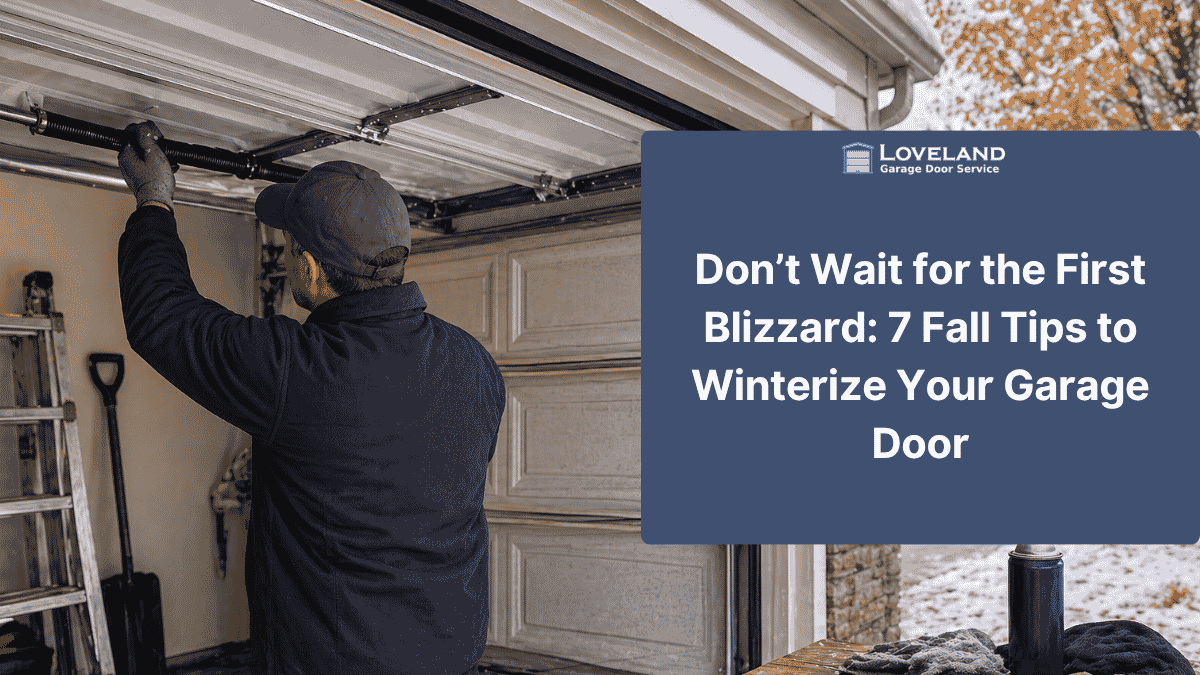

Is your garage door ready for the first winter storm in Loveland, Colorado?
Many homeowners in Loveland do not think about their garage door until the first blizzard hits and something stops working. The door gets stuck. The opener strains. Cold air rushes in. Suddenly, a system you use every day becomes a winter problem.
In Northern Colorado, fall is the best time to prepare your garage door for winter. Waiting until snow, ice, and freezing wind arrive can lead to costly repairs and inconvenient breakdowns. A little seasonal maintenance now can help protect your garage door, improve performance, and keep your home warmer when temperatures drop.
At Loveland Garage Door Service, we help local homeowners prepare their garage doors for Colorado winters every year. If you want fewer winter problems and smoother performance, these seven fall garage door tips can make a big difference.
1. Inspect Your Weather Seal Before Cold Air Moves In
Your garage door weather seal is your first line of defense against winter air, moisture, and debris. It runs along the bottom and edges of your garage door to block drafts and help maintain indoor temperatures.
In Loveland, fall is the perfect time to inspect that seal before freezing weather arrives. If it looks cracked, brittle, loose, or flattened, it may no longer protect your garage.
Many homeowners ask, “Why is my garage so cold in winter even when the door is shut?” In many cases, worn weather stripping is the reason.
Replacing damaged seals in the fall helps keep out snow, cold wind, and moisture before winter starts.
2. Lubricate Moving Parts Before Temperatures Drop
Cold weather makes garage door parts work harder. Springs tighten, rollers stiffen, and metal contracts as temperatures fall.
That is why fall is the best time to lubricate your garage door system. Apply garage door-safe lubricant to rollers, hinges, springs, and tracks to reduce friction and improve performance.
This simple step helps prevent loud noises, jerky movement, and added stress on your opener during winter.
If your garage door sounds louder in cold weather, dry moving parts are often part of the problem.
3. Test Your Garage Door Balance
A garage door that is off balance can become a serious issue during winter. When the door is uneven, your opener has to work harder to lift and close it—especially in freezing conditions.
To test the balance, disconnect the opener and lift the door halfway by hand. If it stays in place, the balance is likely fine. If it drops or rises on its own, the system may be out of balance.
This is one of the most common early warning signs homeowners miss in the fall.
An unbalanced garage door can put extra strain on springs, cables, and your opener right when winter weather increases demand.
4. Clean the Tracks Before Snow and Ice Season
Garage door tracks collect dust, dirt, leaves, and debris all year long. In fall, that buildup can become a bigger problem once snow and moisture enter the system.
Dirty tracks can cause rough movement, noisy operation, and poor alignment. If moisture mixes with dirt and then freezes, it can make winter garage door issues even worse.
Before winter begins, inspect and clean both tracks to remove buildup and improve smooth movement.
Homeowners often search, “Why is my garage door shaking when it opens?” Dirty or obstructed tracks are one common reason.
5. Check the Auto-Reverse Safety System
Your garage door safety sensors are especially important in winter when visibility is lower and weather conditions are harsher.
Leaves, dust, or misalignment can interfere with sensor performance. Test the photo-eye sensors and auto-reverse system in the fall to make sure they respond properly.
Place an object in the door’s path and close it. The door should reverse immediately when the beam is blocked.
This is a simple but important safety step, especially during dark winter mornings and early sunsets in Loveland.
6. Inspect Springs and Cables for Wear
Garage door springs and cables work hard every day, and cold weather makes weak parts more likely to fail.
Fall is the right time to inspect these components for rust, fraying, stretching, or visible wear. Springs are under high tension and should never be adjusted without proper tools, but visible warning signs should not be ignored.
One of the most common winter emergency calls in Loveland is a broken garage door spring during freezing weather.
A fall inspection can help catch wear early and reduce the risk of sudden winter failure.
7. Schedule a Professional Fall Tune-Up
The best way to winterize your garage door is with a professional seasonal inspection before winter starts.
A trained local technician can spot wear, test performance, adjust tension, inspect seals, and prepare your garage door system for freezing temperatures.
At Loveland Garage Door Service, we know what Colorado winters do to garage doors because we see it every season in Loveland. From frozen seals to broken springs and storm-related wear, local conditions create local problems—and local experience matters.
A fall tune-up helps reduce emergency repairs, improves winter reliability, and keeps your garage door ready when the first storm arrives.
Prepare Now Before Winter Becomes a Problem
Your garage door is one of the hardest-working systems in your home, and winter in Loveland can be hard on every moving part.
Do not wait until the first blizzard leaves your garage door stuck, noisy, or frozen shut.
By inspecting seals, cleaning tracks, checking balance, and scheduling fall maintenance now, you can help prevent costly winter breakdowns later.
If your garage door is noisy, uneven, slow, or overdue for seasonal service, Loveland Garage Door Service is ready to help you prepare for winter with reliable local garage door service built for Colorado weather.