Categories Garage Door Tips

Smart Garage Openers: Why You Need One This Winter

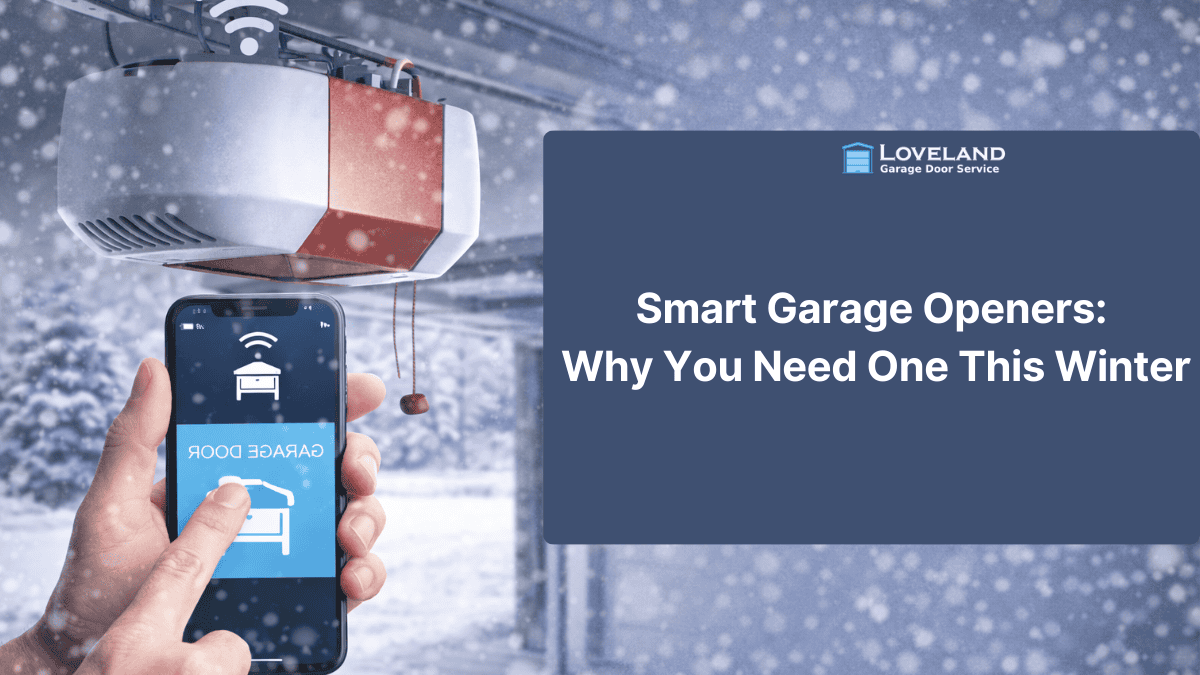
smart garage opener controlled by smartphone in winter

Winter brings more than cold temperatures—it brings snow, ice, and unexpected hassles for homeowners. One of the most common winter frustrations is dealing with a garage door that won’t open when you need it most. This is where smart garage openers make a real difference.

A smart garage door opener adds convenience, safety, and reliability during cold weather. In this article, you’ll learn what smart garage openers are, how they work, and why upgrading before or during winter is a smart move.

What Is a Smart Garage Door Opener?

A smart garage opener connects your garage door to your smartphone using Wi-Fi. Through a mobile app, you can:

  • Open or close your garage door remotely
  • If the door is open, make sure that it is closed
  • Receive real-time alerts
  • Control access for family members or deliveries

These features become especially valuable in winter, when weather conditions are unpredictable.

Why Winter Is Hard on Traditional Garage Openers

Garage door systems are put under extra strain during cold weather:

  • Metal parts contract in low temperatures
  • Lubricants thicken, increasing resistance
  • Ice and snow add weight and friction
  • Power outages and voltage drops occur more often

Traditional openers may struggle under these conditions, leading to slow operation or failure. Smart garage openers are designed with modern motors, sensors, and monitoring features that help reduce winter-related issues.

Top Reasons You Need a Smart Garage Opener This Winter

  1. No More Standing Outside in the Cold

With a smart opener, you can open or close your garage door from your phone—whether you’re in your car, inside your house, or even away from home. This means:

  • No stepping out into snow or freezing wind
  • No struggling with frozen keypads or remotes

Convenience alone makes it a winter essential.

  1. Real-Time Alerts Improve Winter Safety

Smart garage openers send instant notifications if:

  • The door opens unexpectedly
  • The door is left open too long
  • There’s an interruption during operation

In winter, an open garage can quickly lead to frozen pipes, cold air entering your home, or security risks. Alerts help you act fast.

  1. Better Security During Short Winter Days

Winter means longer nights and reduced visibility. Smart openers enhance security by allowing you to:

  • Monitor garage activity remotely
  • Control access without sharing physical remotes
  • Close the door instantly if you forget

This added control provides peace of mind when daylight is limited.

  1. Reliable Performance in Cold Weather

Most smart garage openers use newer, more efficient motors and updated technology. Many models are designed to:

  • Operate smoothly in low temperatures
  • Reduce strain on the door system
  • Detect problems early through diagnostics

This leads to fewer winter breakdowns and smoother daily operation.

  1. Easy Integration with Smart Home Systems

Smart garage openers often integrate with:

  • Smart speakers
  • Home security systems
  • Smart lighting and cameras

For example, you can automatically turn on lights when the garage door opens—especially useful on dark winter evenings.

How Smart Garage Openers Help Prevent Winter Problems

A smart opener doesn’t just add convenience—it helps prevent common winter issues:

  • Alerts notify you before problems get worse
  • Monitoring helps detect unusual behavior
  • Reduced strain extends the life of springs and motors

Early awareness can save you from emergency repairs during freezing temperatures.

Is Your Garage Door Compatible with a Smart Opener?

There are a lot of smart openers available for garage doors today. However, the door must:

  • Be properly balanced
  • Have functional safety sensors
  • Be in good mechanical condition

If your door is old or struggling, upgrading the opener and servicing the door together delivers the best winter performance.

When Is the Best Time to Upgrade?

Winter is actually a great time to upgrade because:

  • You’ll immediately benefit from smart features
  • You avoid mid-winter failures
  • You improve safety and comfort right away

Waiting until spring may mean dealing with avoidable winter issues.

Final Thoughts

A smart garage opener is more than a convenience—it’s a practical upgrade that improves security, reliability, and comfort during winter. From remote access to real-time alerts, smart technology helps you stay in control when cold weather makes everyday tasks harder.

If you’re searching for a dependable garage door solution, call us (970) 367-8600 or contact us today. We can help you choose and install the right smart garage opener to keep your home safe, warm, and connected all winter long.

Categories Garage Door Tips

Don’t Let the Cold Win: A Winter Lubrication Checklist for Garage Doors

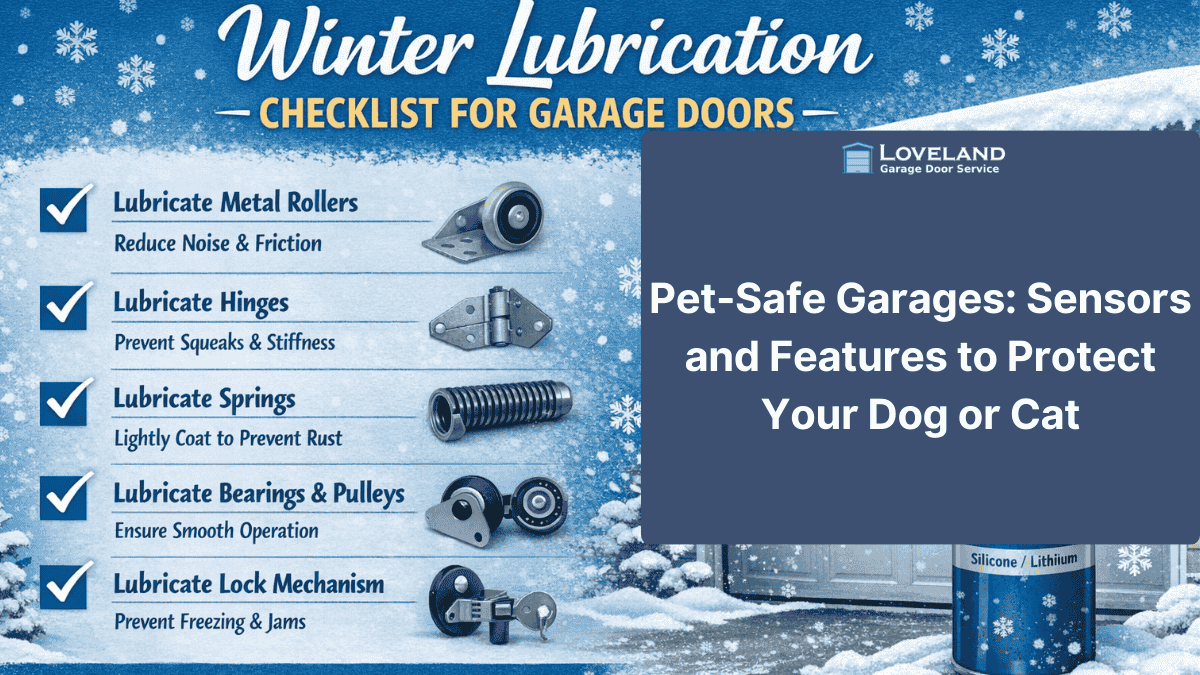
winter lubrication checklist for garage doors infographic

Winter is tough on garage doors. Freezing temperatures, moisture, and ice can turn a smooth-operating system into a noisy, sluggish, or completely stuck door. One of the simplest and most effective ways to prevent winter garage door problems is proper lubrication—done at the right time, on the right parts, with the right products.

This article provides a clear, homeowner-friendly winter lubrication checklist to help keep your garage door running safely and smoothly throughout the cold season. It focuses on simple, effective steps you can take to reduce wear, prevent freezing issues, and avoid unexpected winter breakdowns.

Why Winter Lubrication Is So Important

Cold weather affects garage doors more than most people realize:

  • Metal contracts, increasing friction
  • Old grease thickens and slows movement
  • Moisture freezes, causing parts to stick
  • Dry components wear out faster

Without proper lubrication, your garage door opener works harder, parts wear prematurely, and the risk of breakdowns increases—often on the coldest mornings.

When Should You Lubricate Your Garage Door?

The best time is late fall, before temperatures consistently drop below freezing. If winter has already started, you can still lubricate as long as the door is dry and above freezing during application.

Tip: Avoid lubricating during snow or rain, as moisture can trap dirt and reduce effectiveness.

What Lubricant Should You Use?

lubricating garage door rollers in winter

Use only:

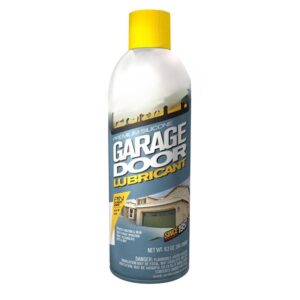
  • Silicone-based spray lubricant, or
  • White lithium grease (garage-door safe)

❌ Avoid:

  • You don’t want to use WD-40 as a long-term lubricant, since it’s a cleaner
  • Heavy automotive grease
  • Oil that attracts dust and dirt

Using the wrong product can make winter problems worse.

Winter Lubrication Checklist for Garage Doors


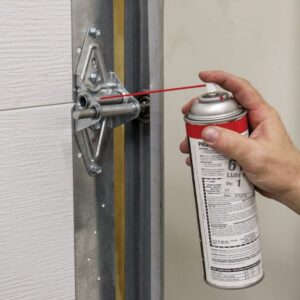
garage door hinge lubrication cold weather

  1. Rollers (Metal Only)

Apply lubricant to the bearings inside metal rollers.

  • Reduces noise and resistance
  • Helps rollers move smoothly in cold weather

⚠️ Do not lubricate nylon rollers unless they have exposed bearings.

  1. Hinges

Hinges flex every time the door opens or closes.

  • Spray lubricant at pivot points
  • Prevents stiffness and squeaking

Well-lubricated hinges reduce strain on the entire door system.

  1. Springs (Torsion or Extension)

Garage door springs are especially vulnerable in cold weather.

  • Lightly coat the spring coils
  • Helps prevent rust and metal fatigue
  • Allows smoother expansion and contraction

Never adjust or repair springs yourself—lubrication only.

  1. Bearings and Pulleys

These parts often go unnoticed but are critical in winter.

  • Apply a small amount of lubricant
  • Prevents grinding and seizing

Quiet operation is a sign these parts are well maintained.

  1. Lock Mechanism (If Manual Lock Exists)

Cold weather can freeze locks.

  • Lubricate the locking bars and keyhole
  • Prevents jamming and corrosion

This is especially important for detached garages.

Parts You Should NOT Lubricate

  • Tracks: Clean them, but do not lubricate
  • Safety sensors: Keep lenses clean and dry
  • Belts or chains: Lubricate only if manufacturer recommends it

Lubricating the wrong parts can attract dirt and cause slipping.

Step-by-Step: How to Lubricate Safely

  1. Close the garage door fully
  2. Disconnect the opener (optional but safer)
  3. Clean dirt and debris from parts
  4. Apply lubricant lightly—less is more
  5. Open and close the door a few times to spread lubricant
  6. Wipe away excess spray

The entire process usually takes 15–20 minutes.

Signs Your Garage Door Needs Lubrication Now

  • Loud squeaking or grinding sounds
  • Jerky or slow movement
  • Door struggles to open in cold mornings
  • Increased vibration during operation

If you notice these signs, lubrication should be done immediately.

How Often Should You Lubricate in Winter?

  • Once before winter starts
  • Once mid-winter if temperatures are extreme
  • Any time the door becomes noisy or stiff

Regular lubrication extends the life of your garage door system.

Final Thoughts

Cold weather doesn’t have to win. If your garage door is properly lubricated, it will operate quietly, safely, and reliably, even during winter. By following this winter lubrication checklist, you reduce wear, prevent breakdowns, and protect your investment all season long.

If you’re searching for a dependable garage door solution or prefer professional winter maintenance, call us (970) 367-8600 or contact us today. Expert care ensures your garage door stays smooth, secure, and winter-ready when you need it most.

Categories Garage Door Tips

Pet-Safe Garages: Sensors and Features to Protect Your Dog or Cat

A Golden Retriever sitting safely inside a garage with the door open

For many of us, the garage is the main entryway to the home. It’s where we load the car for vet visits, wipe muddy paws after a walk, and store the kibble.

But for a curious dog or a hiding cat, the garage can also be one of the most dangerous rooms in the house.

Between the heavy moving equipment, the temperature fluctuations, and the hazardous chemicals often stored there, a standard garage isn’t naturally “pet-proof.” The good news is that with a few adjustments and modern safety features, you can turn this danger zone into a safe space.

Here are the essential sensors and features you need to protect your four-legged family members.

1. The "Invisible Wall": Photo-Eye Safety Sensors

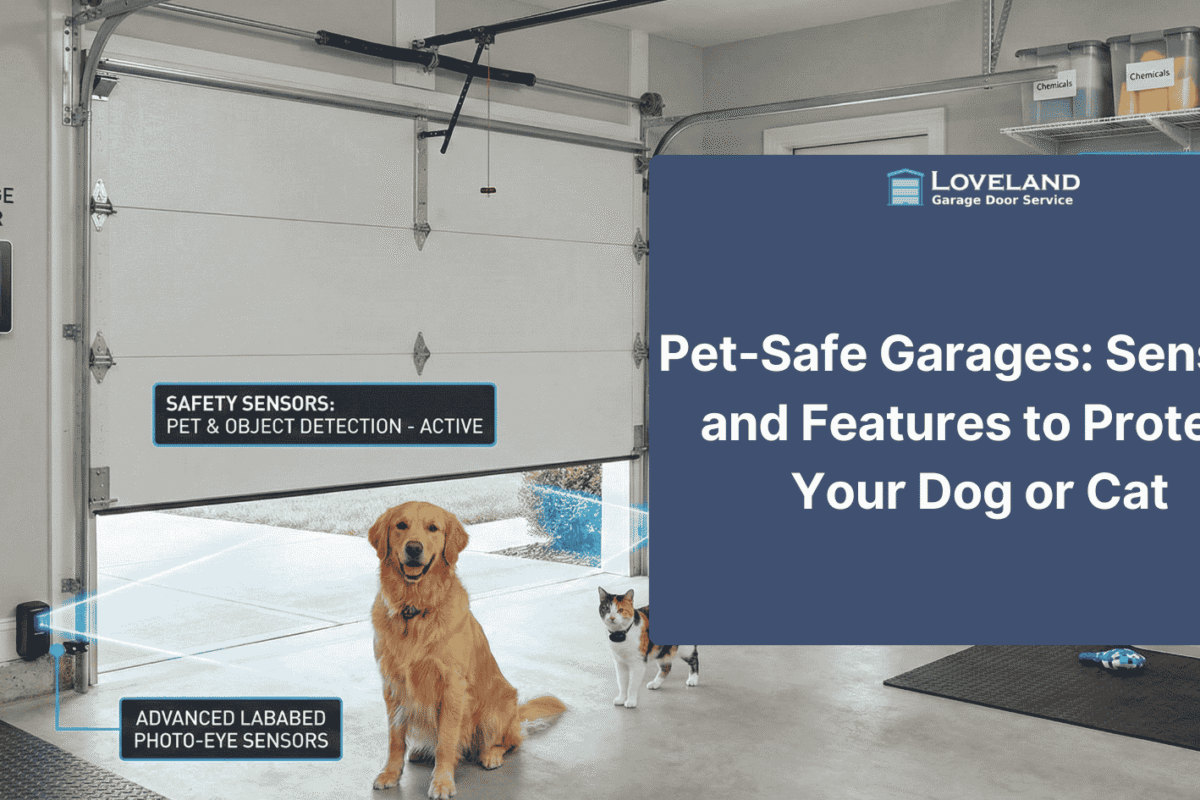
The most critical safety feature on your garage door is the pair of “photo-eye” sensors located at the bottom of the tracks. These shoot an invisible beam across the opening; if the beam is broken, the door automatically reverses.

The Pet Problem:

By federal law, these sensors must be mounted no higher than 6 inches off the ground. However, over time, they can get bumped out of alignment or moved higher by homeowners trying to sweep the floor. If the beam is too high, a small Chihuahua or a crawling kitten could walk right under it without triggering the safety reverse.

The Fix:

  • Measure the Height: Ensure your sensors are mounted no higher than 6 inches from the floor.
  • Test Monthly: Place a roll of paper towels or a small box in the doorway and close the door. If it hits the object without reversing, your sensors need adjustment or replacement immediately.

3. The "Cat Check": Heat & Hiding Spots

Cats are notorious for seeking warmth, and a car engine that has just been turned off is a magnet for them. Tragically, cats often crawl up into the wheel well or under the hood to sleep.

The Feature:

While there isn’t a high-tech sensor for this yet, the “feature” here is a habit.

  • The Hood Thump: Get in the habit of banging on your car hood or honking the horn before you start the engine if you park in the garage.
  • Top of Door Check: Cats also love high vantage points. Before you hit the opener button, glance at the top of the open garage door. If a cat is sleeping on top of the door (which is horizontal when open), they can be crushed or pinched when the door starts to close and turns vertical.

4. Temperature Control: Insulation is Key

Garages are often unconditioned spaces. In the summer, they can become ovens; in the winter, freezers.

If you kennel your dog in the garage or keep the litter box there, insulation is a safety feature.

  • Insulated Garage Doors: A door with a high R-value helps stabilize the temperature, preventing heatstroke in summer or hypothermia in winter.
  • Ventilation: Consider installing a sidewall vent or an exhaust fan to keep air circulating.

5. Chemical Safety: The Antifreeze Danger

This isn’t a sensor, but it is the #1 cause of garage-related pet poisoning. Ethylene glycol (antifreeze) smells and tastes sweet to dogs and cats. Even a teaspoon can be fatal.

The Fix:

  • Switch Products: Switch to a propylene glycol-based antifreeze, which is less toxic.
  • High Shelving: Store all chemicals in high cabinets that are latched. Never leave bottles on the floor.

The Bottom Line

Your automatic garage door is the largest moving appliance in your home. By ensuring your sensors are low enough to detect a paw, adding a camera for visual checks, and managing the temperature, you can ensure your pets stay happy, healthy, and safe.

Need a Safety Check for Your Furry Friends?

If you want to ensure your garage is as safe as possible for every member of your family—including the four-legged ones—we are here to help. Whether you need to realign your safety sensors, upgrade to a smart camera opener, or simply need a routine maintenance check, our team provides reliable, pet-friendly garage door solutions. Call us (970) 367-8600 today to schedule your safety inspection and get peace of mind!

Categories Garage Door Tips

Manual Locks vs. Automatic Deadbolts: What’s Best for Your Garage?

Close up of a manual metal slide lock on a garage door track in Loveland

When we think about home security, we often picture deadbolts on the front door, motion sensor lights, or alarm systems. However, for many homeowners in Northern Colorado, the primary entrance to the house isn’t the front door—it’s the garage.

While garage doors are convenient, the opener that powers them can be a surprising weak link in your home’s defense if it is outdated. Garage door openers manufactured before 2011 (and especially those from the 1990s) lack the sophisticated encryption and mechanical locking features standard in today’s models.

At Loveland Garage Door Service, we want to ensure your home is as safe as it is functional. Here are three hidden security risks lurking in older garage door openers and the modern solutions available to fix them.

The Traditional Choice: Manual Garage Door Locks

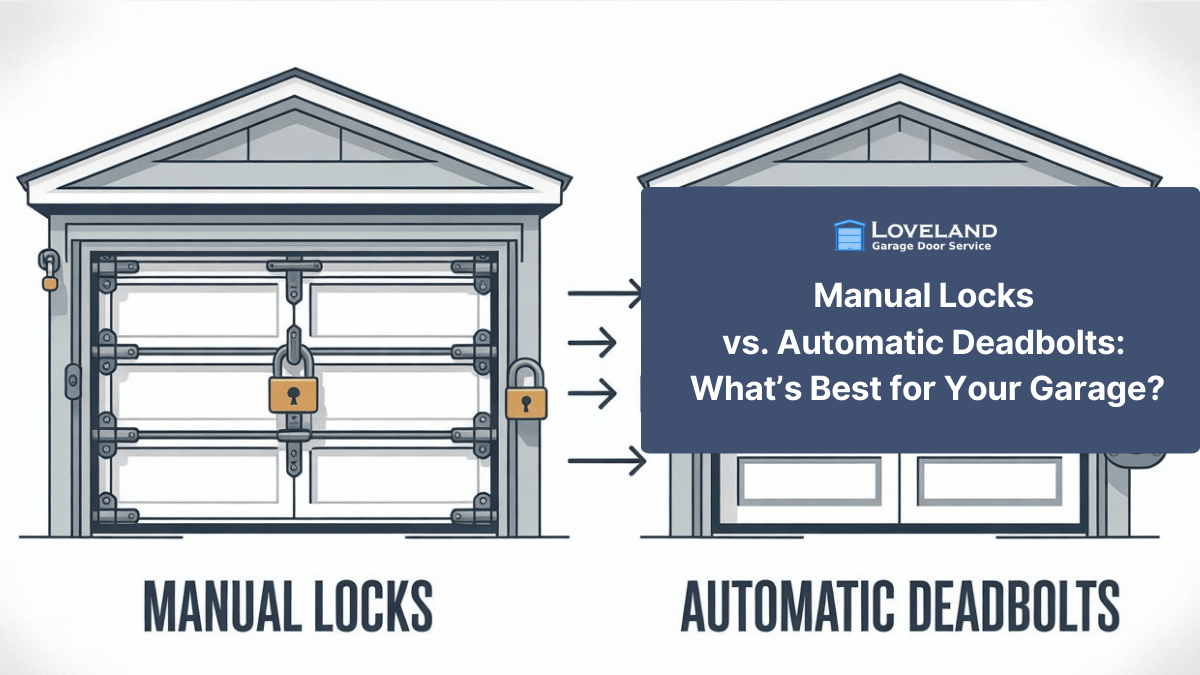
If you look at the inside of your garage door, near the rollers on the side track, you might see a metal bar or a sliding latch. This is the manual lock (often called a slide lock or side lock). It is a simple mechanical device that slides a metal bar through a hole in the vertical track, physically preventing the door from moving upward.

The Pros of Manual Locks:
  1. Simplicity and Durability: There are no electronics to fail, no batteries to replace, and no software to update. It is a solid piece of metal. If you are using your garage strictly for long-term storage and rarely open the door, this is a cost-effective solution.
  2. Vacation Security: Manual locks are excellent for “vacation mode.” If you are leaving Loveland for a week-long trip, engaging the manual lock ensures that even if someone hacks your opener signal, the door physically cannot open.
  3. Cost: Manual locks are inexpensive to install and replace.
The Cons of Manual Locks:
  1. The “Human Error” Risk: This is the single biggest downside. If you engage the manual lock and then someone else in the family (who doesn’t know it’s locked) tries to open the door with the remote, catastrophe strikes. The motor will try to lift the door, but the lock will hold it down. The result? Ripped metal, stripped gears, a burned-out motor, or a door pulled off its tracks. It is one of the most common repair calls we receive.
  2. Inconvenience: You cannot lock or unlock it from your car. You must be inside the garage to engage it. This means it rarely gets used for daily protection, leaving your home vulnerable on a typical Tuesday night.
  3. No Remote Monitoring: You cannot check if a manual lock is engaged from your phone.

The Modern Solution: Automatic Garage Door Deadbolts

Automatic garage door deadbolts (often referred to as “Power Locks”) represent the next generation of security. These are electronic deadbolts that wire directly into your garage door opener. When you press your remote to close the door, the opener lowers the door, and once it is fully closed, the deadbolt automatically slides into the track with a reassuring click. When you press the remote to open it, the bolt retracts before the door begins to move.

The Pros of Automatic Deadbolts:
  1. Foolproof Operation: Because the lock is controlled by the opener itself, the system knows exactly when to lock and unlock. You will never accidentally destroy your door by trying to open it while locked. The opener retracts the bolt before lifting the door, eliminating the risk of damage.
  2. Everyday Security: unlike manual locks, which are only used occasionally, automatic deadbolts secure your home every single time the door closes. You don’t have to think about it.
  3. Defeating the “Coat Hanger” Trick: A common burglary method involves sliding a wire hook through the top of the garage door to pull the emergency release cord. This disconnects the door from the opener, allowing the thief to lift it by hand. An automatic deadbolt physically locks the door to the track. Even if the emergency cord is pulled, the door remains locked down.
  4. Weather Sealing: By physically pushing against the track or locking the door in the down position, these locks can help hold the door tighter against the floor, which is helpful during Loveland’s windy seasons.
The Cons of Automatic Deadbolts:
  1. Cost: These systems are more expensive than manual latches and usually require a compatible opener model (such as the LiftMaster 8500W wall-mount series).
  2. Installation Complexity: These require professional installation to ensure the wiring is correct and the lock aligns perfectly with the track holes.

Which Is Right for Your Loveland Home?

To decide between the two, you need to evaluate how you use your garage.

Scenario A: The “Front Door” User You park in the garage every day. You use the keypad to let the kids in after school. You want seamless convenience. Verdict: Automatic Deadbolt. Manual locks are simply too cumbersome for daily use. An automatic deadbolt gives you the heavy-duty security of a physical lock without the hassle. It offers peace of mind that your door is deadbolted every night without you lifting a finger.

Scenario B: The “Storage Unit” User You park in the driveway. The garage is full of boxes, tools, or a classic car that only goes out on Sundays. You rarely open the big door. Verdict: Manual Lock. Since you aren’t opening the door frequently, the risk of accidental damage is low. You can keep the slide lock engaged permanently for maximum security and simply disengage it on the rare occasions you need to open the door.

Scenario C: The Tech Enthusiast You have a smart home with cameras and automated lights. Verdict: Automatic Deadbolt. Modern power locks integrate with smart home apps (like myQ). You can receive an alert on your phone not just that the door is closed, but that it is locked.

A Note on the "Lock" Button on Your Wall Console

Many homeowners confuse the physical manual lock with the “Lock” button found on their wall-mounted control panel.

  • The Wall Console “Lock” (Electronic Lock): This button stops the opener from accepting signals from remote controls. It is great for vacationing, but it does not physically lock the door to the track. A burglar could still manually lift the door if they managed to trigger the emergency release.
  • The Physical Lock: This (whether manual or automatic) physically secures the door to the metal track.

For maximum security, we recommend a combination: use an automatic deadbolt for physical resistance and the wall console lock for electronic signal blocking when you are away on vacation.

Conclusion

Your garage door is a massive investment and a critical part of your home’s security envelope. While manual locks have served us well for decades, the convenience and safety features of automatic deadbolts make them the superior choice for most modern households in Loveland. They remove the human error that leads to costly repairs and ensure your home is secure 24/7, not just when you remember to slide a latch.

If you are unsure which system is currently on your door, or if you are interested in upgrading to an opener that supports automatic power locks, Loveland Garage Door Service is here to help or you can Call Us Today (970) 367-8600

We can assess your current setup, explain your options, and provide professional installation to ensure your home remains safe and secure against both intruders and the Colorado elements.

Categories Garage Door Tips

3 Hidden Security Risks of Old Openers (and How to Fix Them)

Modern garage door opener security features preventing break-ins

When we think about home security, we often picture deadbolts on the front door, motion sensor lights, or alarm systems. However, for many homeowners in Northern Colorado, the primary entrance to the house isn’t the front door—it’s the garage.

While garage doors are convenient, the opener that powers them can be a surprising weak link in your home’s defense if it is outdated. Garage door openers manufactured before 2011 (and especially those from the 1990s) lack the sophisticated encryption and mechanical locking features standard in today’s models.

At Loveland Garage Door Service, we want to ensure your home is as safe as it is functional. Here are three hidden security risks lurking in older garage door openers and the modern solutions available to fix them.

1. The "Fixed Code" Vulnerability

If your garage door opener was installed before the mid-1990s, it likely uses what is known as “fixed code” technology.

The Risk: In older systems, the remote control and the opener unit communicate using a specific radio frequency code. This code is determined by a set of “dip switches” inside the remote (you might remember flipping little switches to match the pattern on the motor).

The problem? There is a limited number of possible combinations. Tech-savvy intruders can use devices known as “code grabbers.” These devices listen for the signal when you press your remote, record that static code, and then replay it later to open your door when you aren’t home. In some cases, thieves can even drive through neighborhoods with a generic remote, hoping to trigger a door with a common dip-switch pattern.

The Fix: Rolling Code Technology 

Modern openers utilize Rolling Code Technology (often branded as Security+ 2.0 or Intellicode). Every time you press your remote, the opener generates a brand new, random code for the next cycle.

Because the code changes after every single use, a “code grabber” becomes useless. Even if a thief intercepts the signal you just used, that code is now dead and will never open the door again. Upgrading your opener is the only way to get this essential digital protection.

2. The "Fishing" Method (Emergency Release Exploitation)

Every garage door opener is required by federal law to have an emergency release cord (usually a red handle hanging from the rail). This is a vital safety feature that allows you to manually open the door during a power outage or emergency.

The Risk: On older rails and trolley systems, the mechanism that releases the door is designed purely for interior convenience, without considering exterior threats. A common method used by intruders involves using a wire coat hanger.

They can slip the wire through the top weather seal of the garage door, hook the emergency release latch, and pull. This disconnects the motor from the door, allowing them to lift the door manually from the outside. Experienced thieves can do this in under six seconds, often without making a sound.

The Fix: Newer Rail Designs and the “Zip-Tie” Trick 

There are two ways to combat this:

  1. The DIY Band-Aid: Some homeowners use a zip-tie to secure the release latch so it cannot be pulled by a flimsy wire. However, we do not recommend this as a permanent solution because it also prevents you from using the emergency release quickly during a fire or real emergency.
  2. The Modern Upgrade: Newer openers, particularly high-quality LiftMaster or Genie models, feature improved trolley designs that make the “fishing” method significantly harder. Furthermore, installing a PosiLock system (standard on many new units) ensures that when the door is down, the motor physically forces it shut, making it nearly impossible to pry open or slide up manually.

3. The "Human Error" Factor (Leaving the Door Open)

The biggest security risk isn’t always high-tech hacking or lock-picking; often, it’s simply forgetfulness.

The Risk: We have all done it. You leave for work in a rush, or you bring the groceries in and forget to hit the wall button. A garage door left open is an open invitation—not just to burglars, but to wildlife and weather damage.

With an old opener, you have no way of knowing the door is open once you drive away. You spend the rest of the day with that nagging anxiety: “Did I close the garage?”

The Fix: Smart WiFi Connectivity 

This is where the biggest leap in garage technology has occurred. Modern openers now come with built-in WiFi and smartphone integration (such as MyQ technology).

  • Real-Time Alerts: You get a notification on your phone the instant your garage door opens or closes.
  • Remote Control: If you get to work and realize the door is open, you can tap a button on your phone to close it from anywhere in the world.
  • Scheduled Closing: You can program the door to automatically close every night at 10:00 PM or after 10 minutes of inactivity.

Eliminating the possibility of human error is one of the most effective security upgrades you can make.

Why Repair When You Can Upgrade?

If your garage door opener is making grinding noises, struggling to lift the door, or is simply over 15 years old, you are likely missing out on these critical security features.

While we love fixing doors, there comes a time when maintaining an old unit costs more in safety risks than it saves in cash. A new installation offers:

  • Battery Backup: Get in and out even during Colorado winter power outages.
  • Quieter Operation: Swap that noisy chain drive for a whisper-quiet belt drive.
  • Peace of Mind: Knowing your home is digitally and physically secure.

Secure Your Home with Loveland Garage Door Service

Your garage door is the largest moving object in your home and a primary entry point. Don’t leave it vulnerable to outdated technology.

Whether you are located right here in Loveland, or nearby in Fort Collins or Greeley, our team is ready to help you evaluate your current security setup. We provide professional installation of top-rated openers that feature rolling codes, PosiLock security, and smart-home integration.

Is your garage door opener protecting your home or inviting trouble?

Contact Us Today (970) 367-8600 for a safety inspection or a free quote on a new, high-security opener installation. Let’s keep your home safe and your mind at ease.